What teachers and schools should know about social media
On average, 21% of the school day is spent on social media by students in secondary education.
Students as young as 13 are active on social media during lessons, with usage peaking even during school hours (08:00–14:00).
Students averaged 3+ hours daily on social media, with TikTok and Snapchat dominating use.
These are just three of the many findings from our research collaboration with the Danish Competition and Consumer Authority. The full report can be downloaded via their website.
Social media use is habitual and often unconscious, making it hard for students to self-regulate without support.
That’s why we designed an intervention app, that helps students regain autonomy:
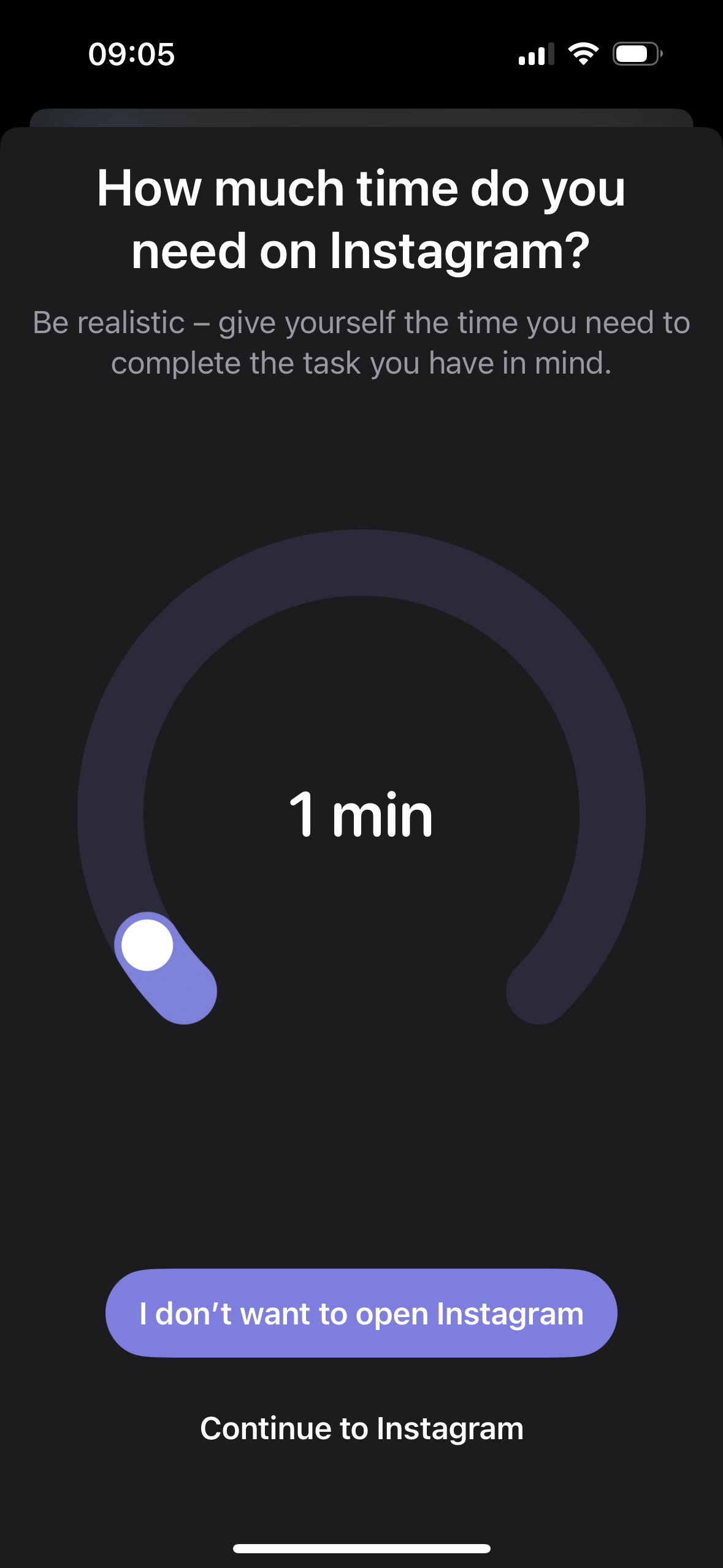
Adding one sec’s “friction” interventions (like short delays or planning prompts) before social media use can help students self-regulate without banning or restricting apps:
Whenever social media apps are opened, one sec prompts users to take a deep breath and / or to plan how much time they would like to spend on a target app. When the selected timelimit is reached, users have to go through another intervention to unlock more time.
Hundreds of students participated in our project – and we were able to show that one sec’s interventions reduces social media usage by almost 50% throughout the day (and most importantly: during school hours).
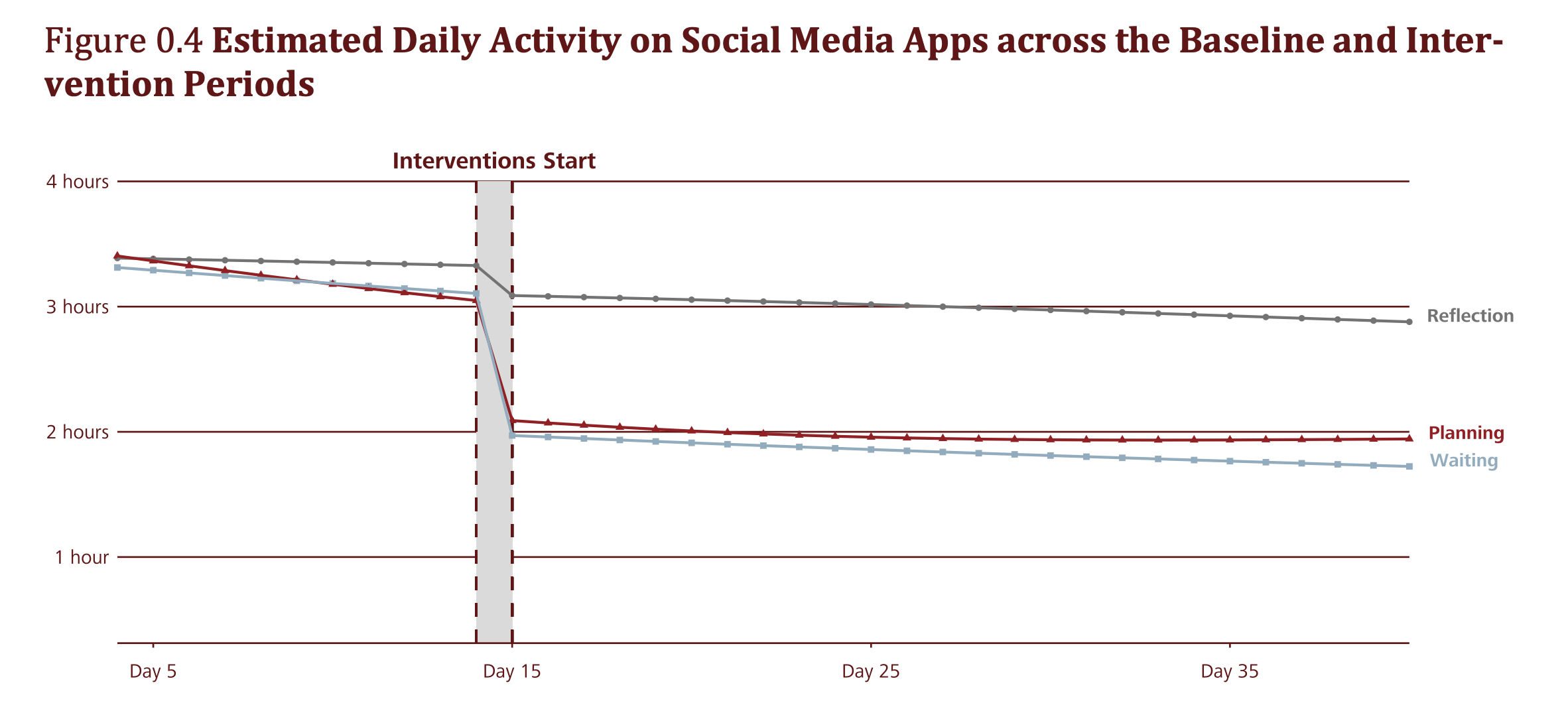
Diagram info: the reflection group includes a softer intervention (control group) just asking for the current mood – while planning and waiting were actual interventions from the one sec app.
On top of that, interventions did not reduce students’ satisfaction with social media or their sense of social connection.
Students with low self-control or higher addiction levels showed the biggest improvements, suggesting targeted support is effective.
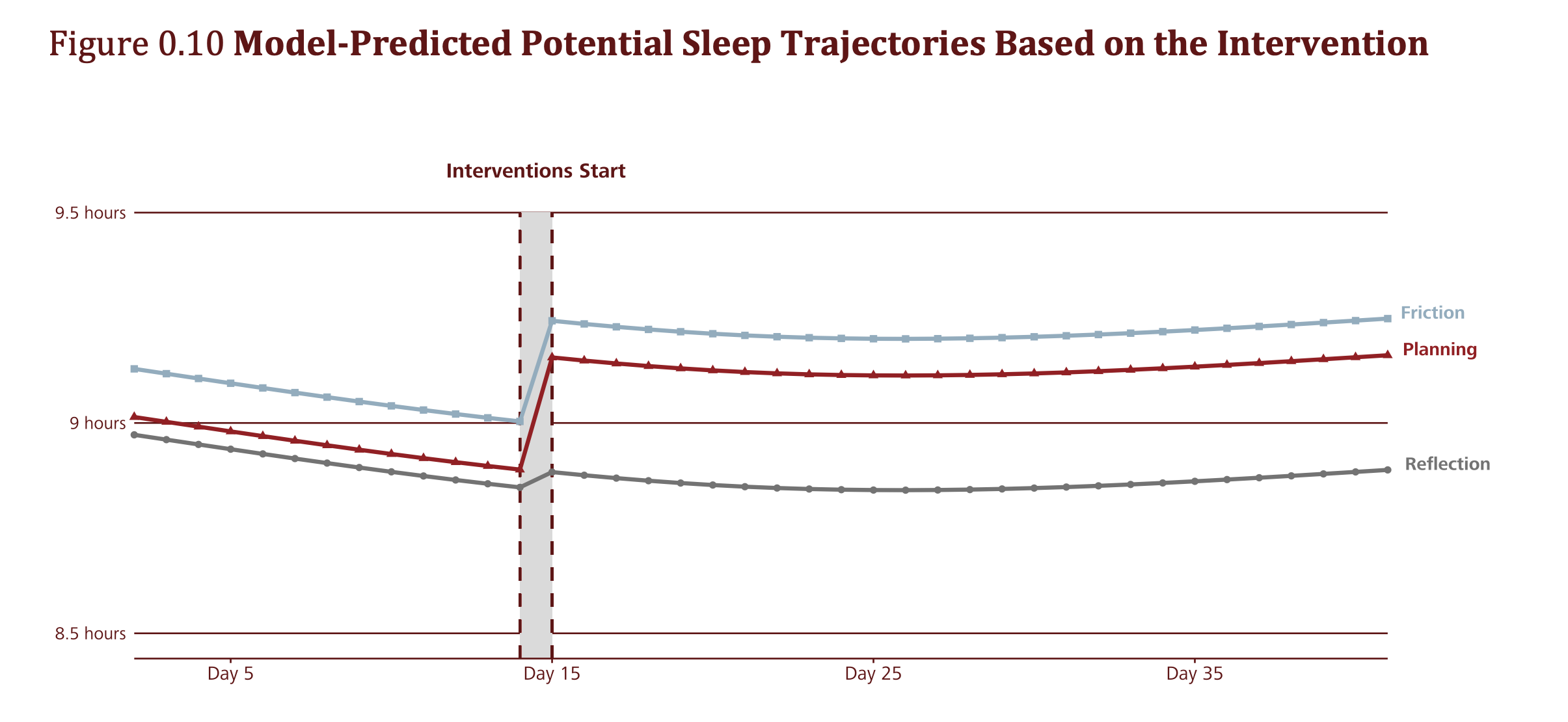
On top of reducing screen time, one sec also helped to establish healthier sleep routines. By spending less time on their phone by going to bed, participants would get an additional 2 hours of sleep per week – and we all know how important sleep is for school performance!
After concluding the project, a large portion of participants wanted to keep using one sec – which is a great sign that social media overuse is actually something that students are aware of and change is seen as beneficial.
Practical Implications for Teachers
- Social media habits directly affect attention during school hours; real-time interventions may be more effective than blanket bans.
- Teachers can encourage use of apps like “one sec” to promote intentional use, especially for students struggling with focus or self-control.
- Raising awareness about habits vs. conscious choices can be a valuable part of media literacy education.
- Collaborating with parents and students to implement non-restrictive, behaviorally informed tools may yield better classroom engagement than punitive controls.
- Consider incorporating discussions about digital wellbeing and self-regulation into advisory periods or health education.
Frederik Riedel
June 20, 2025